AT or IT? And What Can an AT Specialist Help WIth?
Inside: Assistive technology is defined by multiple laws and regulations, but explaining it to others can become confusing. This article shares the legal definition of assistive technology and some simple ways to explain what it is and how it helps people.
“What is assistive technology?”
This is a question I’m asked on a regular basis.
I take a deep breath and get ready for the confusion I know will follow over the next few minutes as I try to find a way to explain how hundreds of different tools fall into the category of assistive technology and how I use them to help people with disabilities.
Sometimes when a friend asks what I do for work or when I’m meeting someone who wants to explore assistive technology for themselves or a loved one.
What starts as a simple question often leads to confusion and looks of bewilderment.
As soon as I say “assistive technology” and see the instant light of recognition in people’s eyes, I know it is probable they:
Use assistive technology themselves.
Also work with assistive technology.
Are imagining server rooms and coding.


When I say “assistive technology,” the first thought that comes to people's minds is “Information Technology.” This is soon followed by mental images of computer programmers, software engineers, and hardware engineers.
While I would love to have this particular skill set, I’m still learning to code and often need to consult my IT friends about RAM, screen resolutions, and all of the magic happening inside my computer.
So, while AT and IT sound similar, there can be a definite difference in skill sets.
Table of Contents:
So, Then, What is Assistive Technology?
When looking for an assistive technology definition, starting with the most archetypal definition can be helpful.
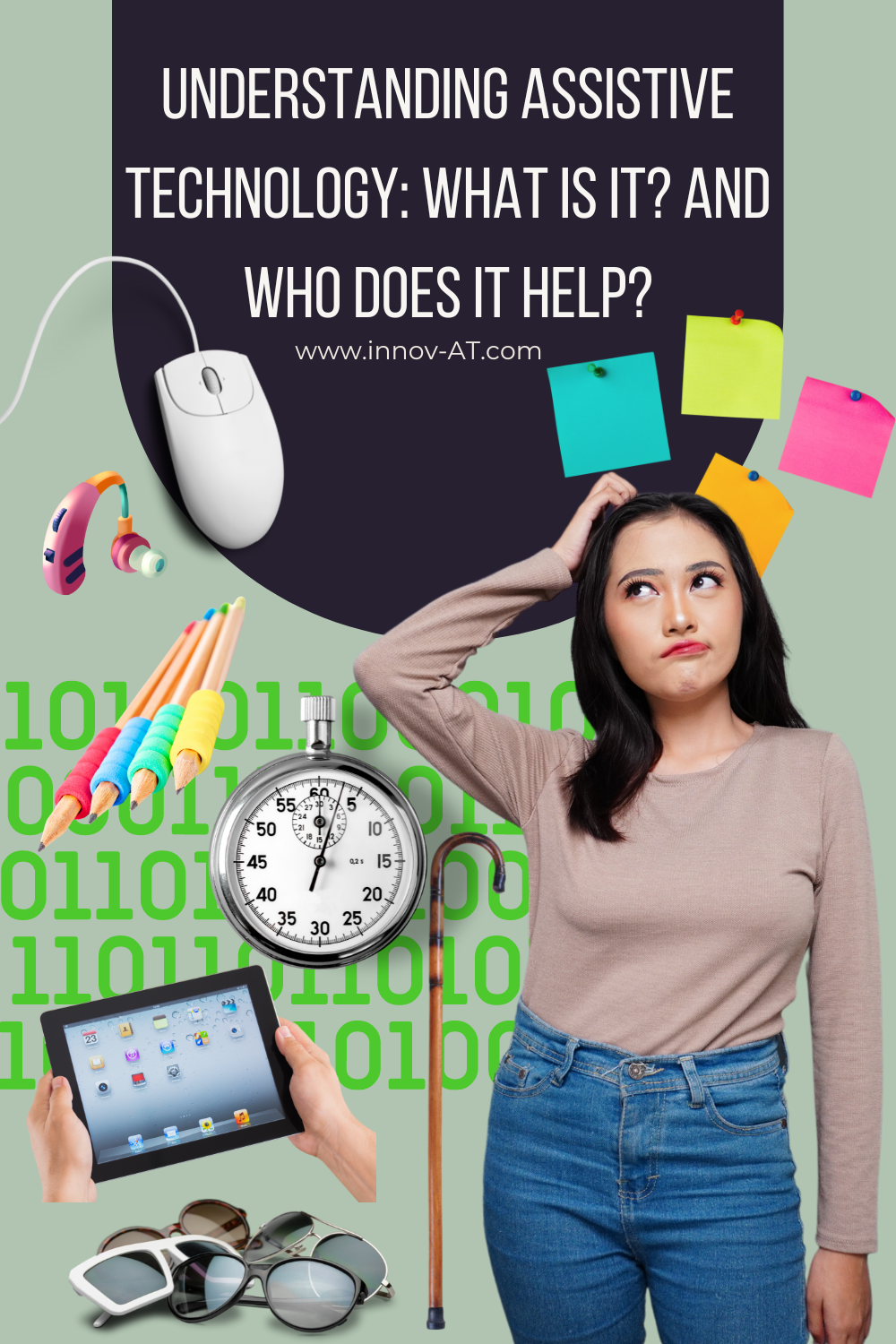
Assistive technology can be defined as any device, equipment, software, or product that helps people with disabilities have more independence and improve their quality of life.
Typically, I will explain this can be as simple as a magnifying glass for someone with low vision or as complex as a communication device for someone with difficulty speaking.
In fact, there are so many possibilities and advancements in assistive technology that the options seem endless. That's where we come in—helping people find the right tools to enhance their abilities and make everyday tasks more manageable. [5 Little Known Facts About Assistive Technology for Executive Functioning]
Is There a Legal Assistive Technology Definition?
References to assistive technology in federal legislation offer a variety of descriptions.
The Tech Act of 1988 describes an assistive technology device as:
“any item, piece of equipment, or product system, whether acquired commercially off the shelf, modified, or customized, that is used to increase, maintain, or improve functional capabilities of individuals with disabilities.”

The Tech Act described an assistive technology service as:
"any service that directly assists an individual with a disability in selection, acquisition or use of an assistive technology device."

The Individuals with Disabilities Education Act (IDEA) is a law that ensures a free and appropriate public education for children with disabilities. This law defines assistive technology in a similar manner to the Tech Act. [Change Your Classroom Today- How Assistive Tech Can Help Your Students]
IDEA defines the term “assistive technology device” as:
“any item, piece of equipment, or product system, whether acquired commercially off the shelf, modified, or customized, that is used to increase, maintain, or improve functional capabilities of a child with a disability. It adds the exception that this term does not include a medical device that is surgically implanted or the replacement of such device.”
IDEA also defines “assistive technology service” as:
any service that directly assists a child with a disability in the selection, acquisition, or use of an assistive technology device. Subsequently, listed examples of assistive technology services include:
the evaluation of the needs of such child, including a functional evaluation of the child in the child's customary environment
purchasing, leasing, or otherwise providing for the acquisition of assistive technology devices by such child
selecting, designing, fitting, customizing, adapting, applying, maintaining, repairing, or replacing assistive technology devices
coordinating and using other therapies, interventions, or services with assistive technology devices, such as those associated with existing education and rehabilitation plans and programs
training or technical assistance for such child, or, where appropriate, the family of such child
training or technical assistance for professionals (including individuals providing education and rehabilitation services), employers, or other individuals who provide services to, employ, or are otherwise substantially involved in the major life functions of such child

Is There a Simple Definition of Assistive Technology?
While there are laws regarding assistive technology services and devices, for most people, assistive technology can be described simply as any tool that helps someone with a disability do things they could not do without it.
This also can include the support of an assistive technology professional in selecting, acquiring, or learning how to use the tool.
Why You Can’t Just Go to an Assistive Technology Store
Although there are many places to find assistive technology, such as organizations specializing in providing support for specific types of disabilities, it is difficult to find a store selling all types of assistive technology. This is in part because a tool categorized as assistive technology for one person may only be helpful to another.
A tool becomes assistive technology when it is used by someone with a disability to gain access or functionality they would not have without the tool.
For example, think about a pair of glasses. People may wear glasses to:
Improve sight
Block the sun
Look cool
Some people wear glasses because they like how they look and wear them as a fashion statement. Others wear glasses so they can see better.
Glasses are assistive technology for people who must wear them to see clearly. For people who wear them because they’re fun, they’re an accessory.

The use of the tool is what makes it assistive technology, not the specific tool itself.
This is one reason it can be beneficial to work with an assistive technology professional to learn more about how everyday tools can be used and which tools made specifically as assistive technology can best meet the needs of each individual with a disability.
An Assistive Technology Professional Helps People…
I have come up with this definition when people ask what I do, followed by “What is assistive technology?”
We help people with disabilities do things they want but at this moment, can’t.
This can be done using low-tech things like:
pencil grips
special papers
adjustable desks
Or it can be high-tech things like:
computers
AI tools.
communication systems
Most of the time, once I get out that I help people do things they currently can’t, I see the spark of excitement in the other person’s eyes.
They have all experienced the frustration of being unable to figure something out or make something work.
They can imagine— just a bit— how frustrating it might be to have a disability limiting what a person can do, and that ends up being their assistive technology definition:
Tools that help someone with a disability do something they couldn’t do without it.
And I’m okay with that. At its core, no matter how many formal and legal definitions exist, the goal is always the same—to help people feel and be independent in doing as many things as possible through assistive technology tools and services.
If you are interested in learning more about assistive technology, sign up for our newsletter where we will share more about assistive technology and ways it can be used to help individuals with disabilities.
FAQ:
What is one example of assistive technology?
There are many examples of assistive technology. One common assistive technology is the use of speech-to-text for individuals who have a physical disability that makes typing difficult or individuals with a writing disability who struggle with spelling or forming written words.
What is assistive technology in the classroom?
Assistive technology in the classroom can include a variety of tools for reading and writing such as speech-to-text and text-to-speech. Audiobooks, enlarged print, and accessible PDFs are also frequently used assistive technologies. However, many other assistive technology tools are also used as they are specific to each student.
What is the difference between assistive technology and accommodations?
Assistive technology is any tool that is used by an individual disability to increase or maintain functional capabilities. Accommodations are things that are adjusted or changed in order to make an environment, activity, or lesson more accessible to an individual.
What is assistive technology for speaking?
Assistive technology for frequently is frequently called Augmented Alternative Communication- AAC. AAC includes all of the ways that someone communicates besides talking.
What are the types of assistive technology?
Common types of assistive technology include those for communication, writing, reading, physical access, hearing, sight, and more. If a person with a disability is unable to do something, there is likely a type of assistive technology that will help them. This could include tools for cooking, computer work, mobility, and more.
What are the current assistive technology trends in education?
Assistive technology is frequently used in the classroom along with Universal Design for Learning– UDL– strategies that make lessons accessible from the moment they are created.