Do You Have Trouble Turning Pages? Reach for Page Fluffers!
Inside: Page fluffers for reading are a low-tech AT solution for difficulty turning book pages, whether it be due to mobility issues, chronic pain, or visual impairment, etc.
When we think about assistive technology, it’s easy to picture high-tech devices like speech-generating tablets, screen readers, or voice-controlled gadgets. These tools are undeniably powerful, but assistive technology doesn’t have to be expensive or complicated to make a difference. Sometimes, the most effective solutions are low-tech, low-cost, and simple to implement—and that’s where page fluffers shine.
Table of Contents
Why Low-Tech Assistive Technology Matters
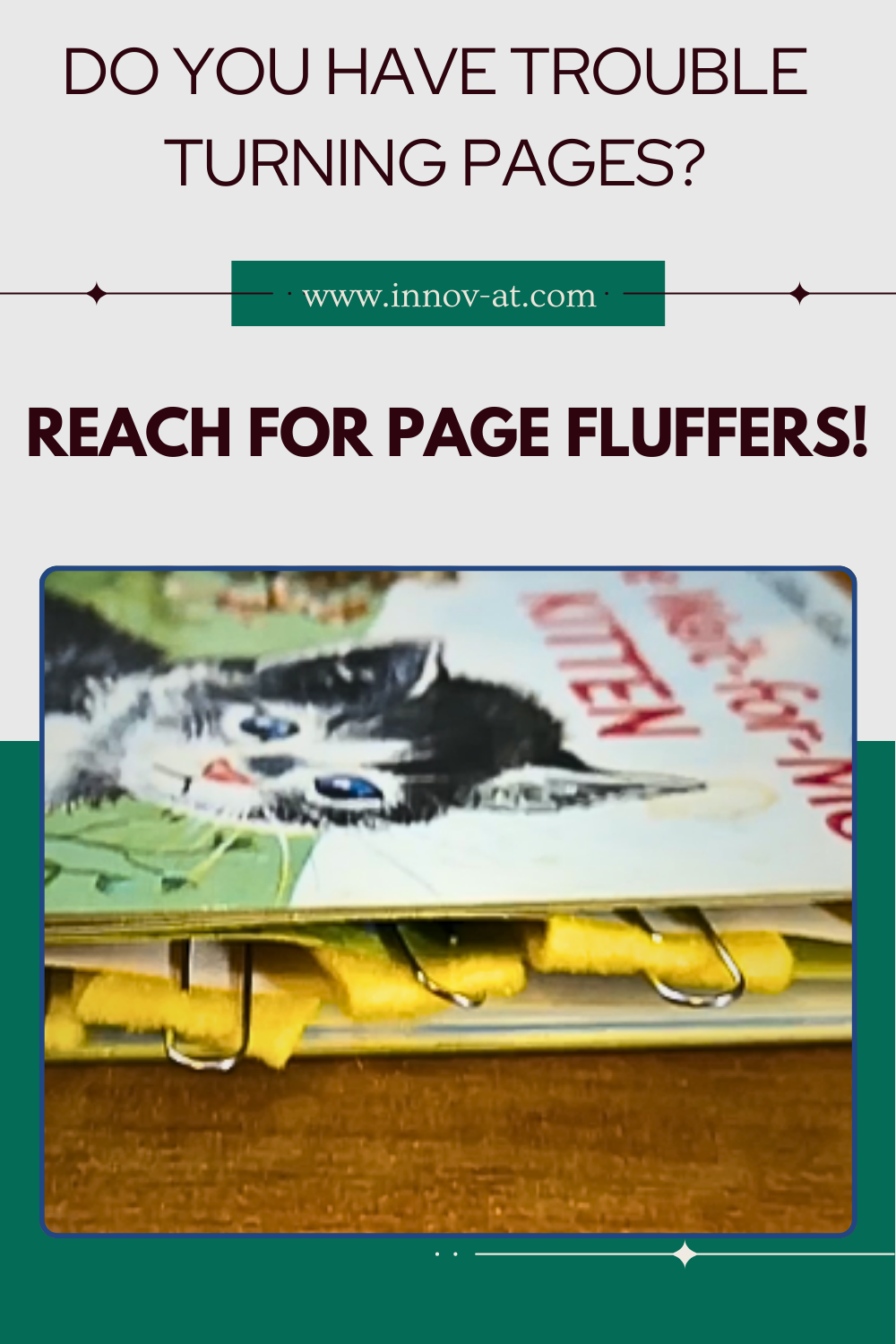
What Is a Page Fluffer?
A page fluffer is a small, tactile tool designed to make turning the pages of a book, workbook, or binder easier. Making one might be as simple as a foam dot placed at the edge of each page, a small tab, or even a cotton ball glued between pages to give them a little extra “lift.” This makes the pages easier to grip and separate, for individuals with fine motor challenges in particular.
Page fluffers might not sound groundbreaking, but for someone with limited finger strength, arthritis, or motor control difficulties, they can mean the difference between frustration and independence.

Why Low-Tech Assistive Technology Matters
A common misconception is: assistive technology needs to be complex or pricey to be valuable. Low-tech solutions like page fluffers challenge this assumption. These simple tools are:

Affordable: You don’t need to buy an expensive device to improve accessibility. Page fluffers can be created with materials you already have at home or in the classroom. Foam dots, rubber bands, cotton balls, or sticky tabs are all low-cost options which can transform the reading experience.
Easy to Use: Unlike some high-tech devices that require training or setup, page fluffers are intuitive. A child, caregiver, or teacher can add them to a book or binder in a few minutes, with no special skills required
Widely Accessible: Page fluffers can benefit a wide range of people, including those with motor challenges, visual impairments, or even young children learning to handle books. Their versatility makes them a practical tool in classrooms, libraries, and at home.
[Learn more about low-tech assistive technology here]
Who Can Benefit from Page Fluffers?
Page fluffers are useful for anyone who has difficulty turning pages, including:

Students with Fine Motor Challenges: Children with conditions like cerebral palsy, muscular dystrophy, or Down syndrome may struggle to separate thin pages. Fluffers give them extra grip, promoting independence in reading and learning.
Older Adults with Arthritis: Joint pain and stiffness can make even simple tasks like flipping through a book feel overwhelming. Page fluffers reduce the effort required, making reading more enjoyable.
Individuals with Visual Impairments: For people with limited vision, tactile aids like foam dots or raised tabs make it easier to locate and turn pages.
Young Children: Emerging learners often have trouble handling delicate book pages. Page fluffers can make books more durable and easier to explore.
DIY Page Fluffer Ideas
One of the best things about page fluffers is how easy they are to customize. You don’t need special equipment or expensive materials—just a little creativity. Here are some simple, DIY ideas:
Temporary Page Fluffers:
Foam Stickers: Place small foam stickers (the kind used in craft projects) at the corner of each page. These add thickness and make the pages easier to grip.
Cotton Balls or Velcro Dots: Glue small cotton balls or Velcro dots between pages to create extra space and texture.
Binder Tabs: Add colorful binder tabs to the edge of each page for easy turning and organization.
Rubber Bands: Wrap a thin rubber band around the bottom corner of each page to create lift and separation.
Paper Clips: Attach paper clips to the edges of pages for an easy-to-remove fluffer option which provides added grip and separation.
![[left to right] small cotton balls, popsicle sticks, plastic straws, a bottle of puffy paint, large cotton balls, q tips, pipe cleaner, velcro dot stickers, pony beads](https://images.squarespace-cdn.com/content/v1/5fb875a443d09d68b8eb3c98/9998bc2f-a72a-4ac1-8e54-6bc1bb788045/page+fluffers+for+reading)
Permanent Page Fluffers:
Page Separators: Attach small plastic or rubber page separators to books or binders for long-term use.
Built-in Tabs: Use self-adhesive tabs designed for permanent application to provide a consistent aid for turning pages.
Laminated Corners: Reinforce the bottom corners of pages with laminated stickers or small plastic guards for increased durability and accessibility.
3D-Printed Add-ons: Custom 3D-printed tabs or corner grips can be attached to books for a more professional and durable solution.
The Power of Simple Solutions
Assistive technology doesn’t have to be flashy to be effective. Sometimes, it’s the simplest tools—like a page fluffer—that have the biggest impact on someone’s ability to learn, engage, and participate fully in everyday activities. By embracing low-tech, low-cost solutions, we can make accessibility more achievable for everyone. Learn about more low-tech reading tools here.

Whether you’re a teacher, caregiver, parent, or advocate, remember small adaptations can lead to big changes. Page fluffers are a perfect reminder that assistive technology isn’t only about high-tech innovation—it’s about meeting people where they are and empowering them with tools that work.
So, the next time you see a student struggling to turn the pages of a book, consider adding a simple page fluffer. This may seem like a small change, but for the student, it could be the key to greater independence, confidence, and success.
What other low-tech assistive tools do you love?
Join us on social media to share your ideas!





Wondering whether assistive technology would help in your situation?
Innov-AT provides assistive technology assessments, training, and implementation support across Wisconsin — for students, adults, schools, agencies, and employers. If someone in your life is struggling with a task, we can tell you in a short call whether AT is likely to help.